The Problem Isn’t Safety. It’s Context.
Most brand safety systems were designed for a world where content could be neatly classified. A page about sports is “sports.” An article about finance is “finance.” You assign a category, apply a rule, and move on.
Video doesn’t work that way.
Video communicates through tone, pacing, imagery, and narrative. Two pieces of content can sit in the exact same category and create completely different emotional responses. One can feel informative and balanced. The other can feel chaotic, negative, or even unsettling, without ever crossing a traditional “unsafe” threshold.
That gap between classification and experience is where brand safety starts to break.
Video Is Miscategorized And It Matters
In our analysis of video content across platforms:
89.98% of videos were miscategorized at a level that could change how a brand is perceived.
Not wildly incorrect. Just wrong enough to matter.
But the more interesting finding wasn’t just miscategorization, it was how content behaved within those categories.
We consistently saw:
- “safe” categories carrying negative or emotionally charged tone
- wide variation in narrative within the same classification
- brands appearing in contexts that weren’t captured in metadata at all
In other words:
The issue isn’t whether content is safe. It’s whether it aligns.
When “Safe” Doesn’t Mean Right
We recently looked at campaigns run by large agencies and global brands that had all standard safety controls in place.
On paper, everything checked out:
- approved categories
- no flagged keywords
- verified inventory
But when we reviewed the actual content, a meaningful portion of impressions were delivered against videos that carried:
- highly negative tone
- emotionally charged narratives
- or controversial framing
Nothing was technically unsafe.
But it wasn’t aligned.
Why This Matters More Than You Think
Consumers don’t evaluate content the way systems do.
They don’t think in terms of:
- categories
- taxonomies
- verification tags
They react to what they see, and how it makes them feel.
Two placements can look identical in a report:
- same category
- same platform
- same safety status
And still create completely different impressions in the real world.
One reinforces trust.
The other subtly works against it.
Brand Safety Isn’t Broken, The Lens Is
The industry hasn’t failed because there’s a lack of data.
If anything, there’s more data than ever.
The problem is that we’re still using a framework that wasn’t built for how video actually works.
We’ve optimized for:
- filtering
- blocking
- categorizing
But not for:
- interpreting
- understanding
- contextualizing
The Shift That’s Already Happening
The question is no longer just:
“Is this content safe?”
It’s becoming:
“Does this content align with how we want to be perceived?”
That requires a different level of understanding, one that looks beyond categories and into the actual experience of the content itself.
Because at the end of the day, that’s what your audience remembers.
And increasingly, that’s what defines your brand.
Want to See the Difference for Yourself?
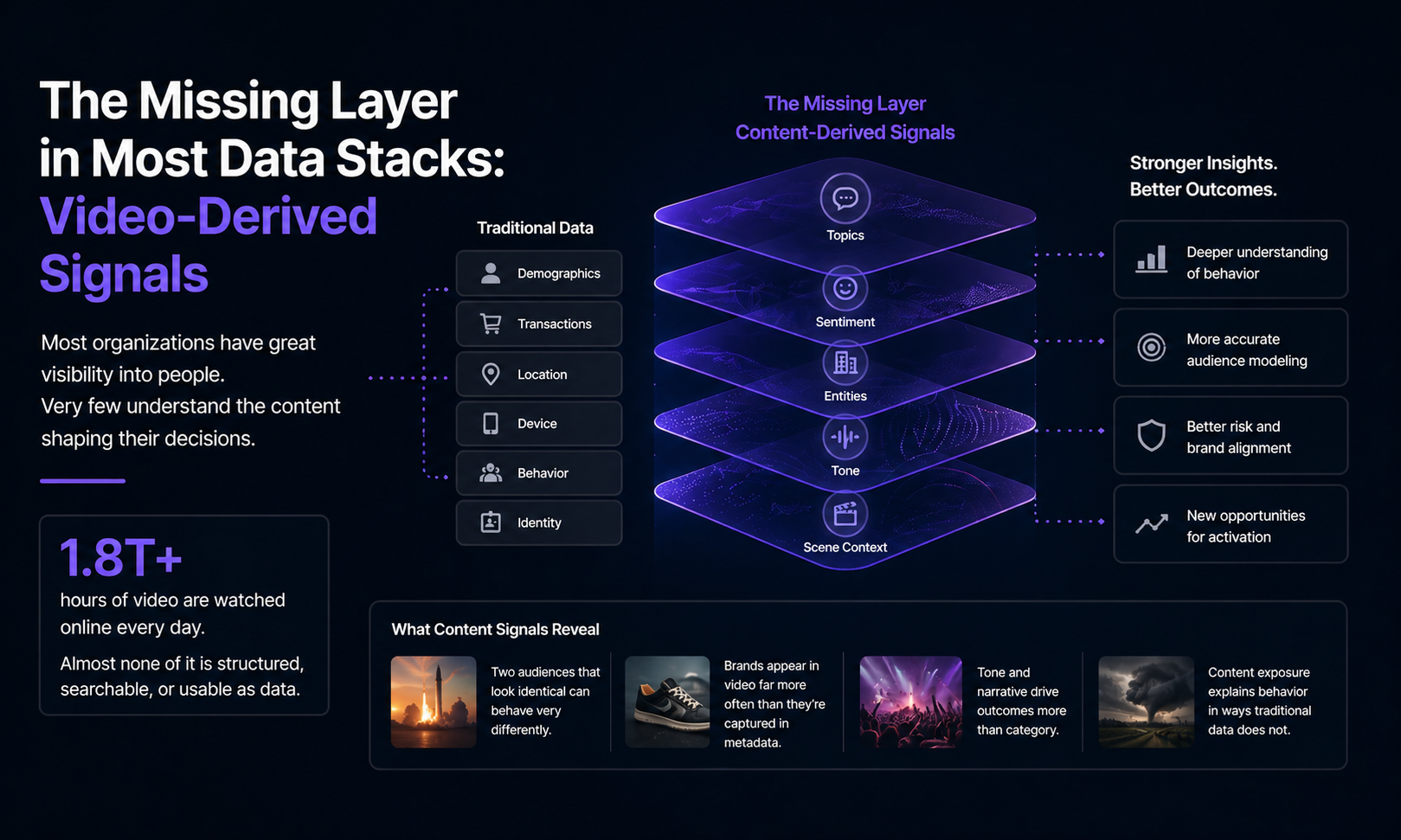
We’ve been analyzing video at the level of:
- tone
- sentiment
- narrative
- and scene-level context
If you’re curious how your brand actually appears in video, not just where it runs, we’re happy to walk through a few examples.