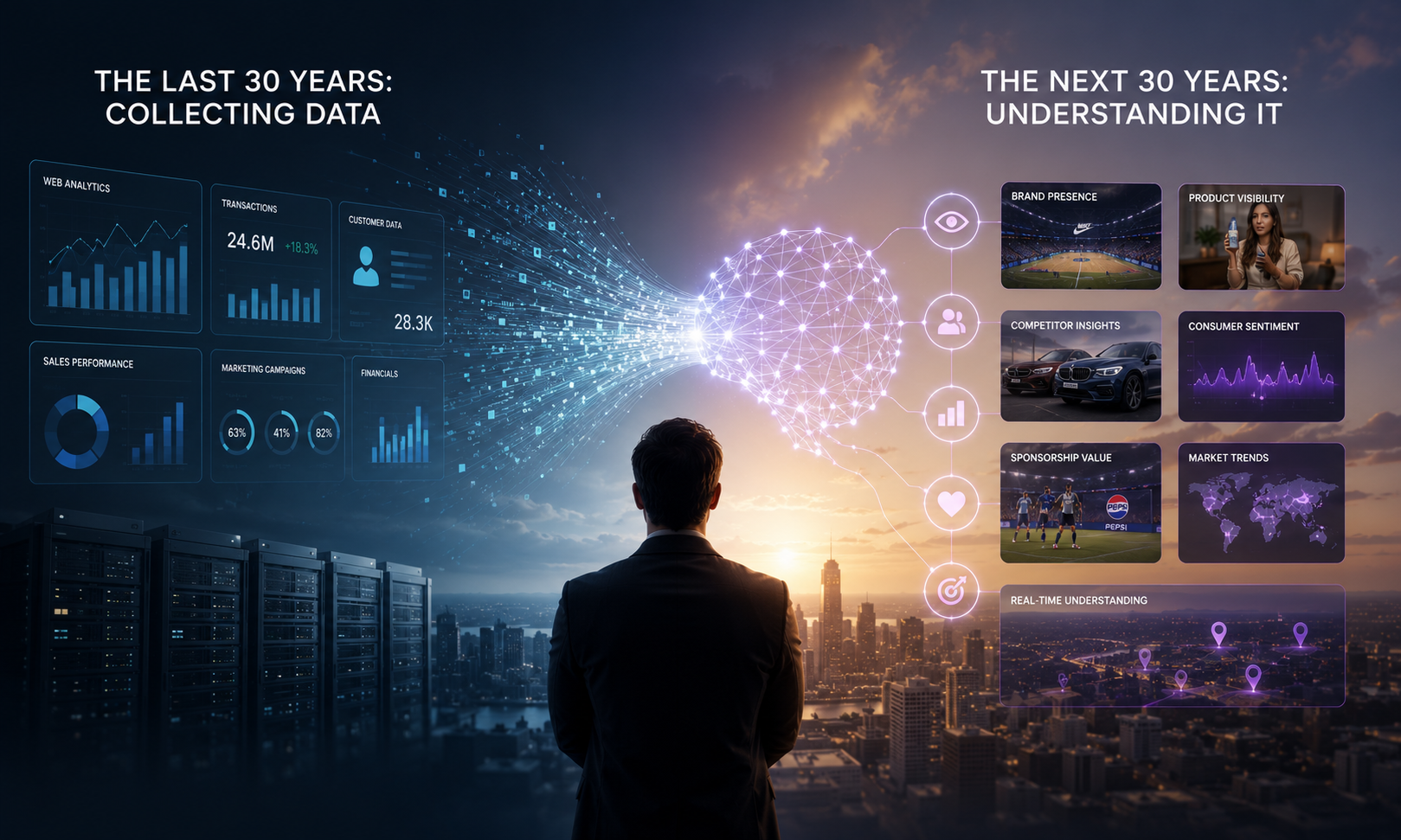
And to be fair, most of them are getting really good at it.
They’re organizing:
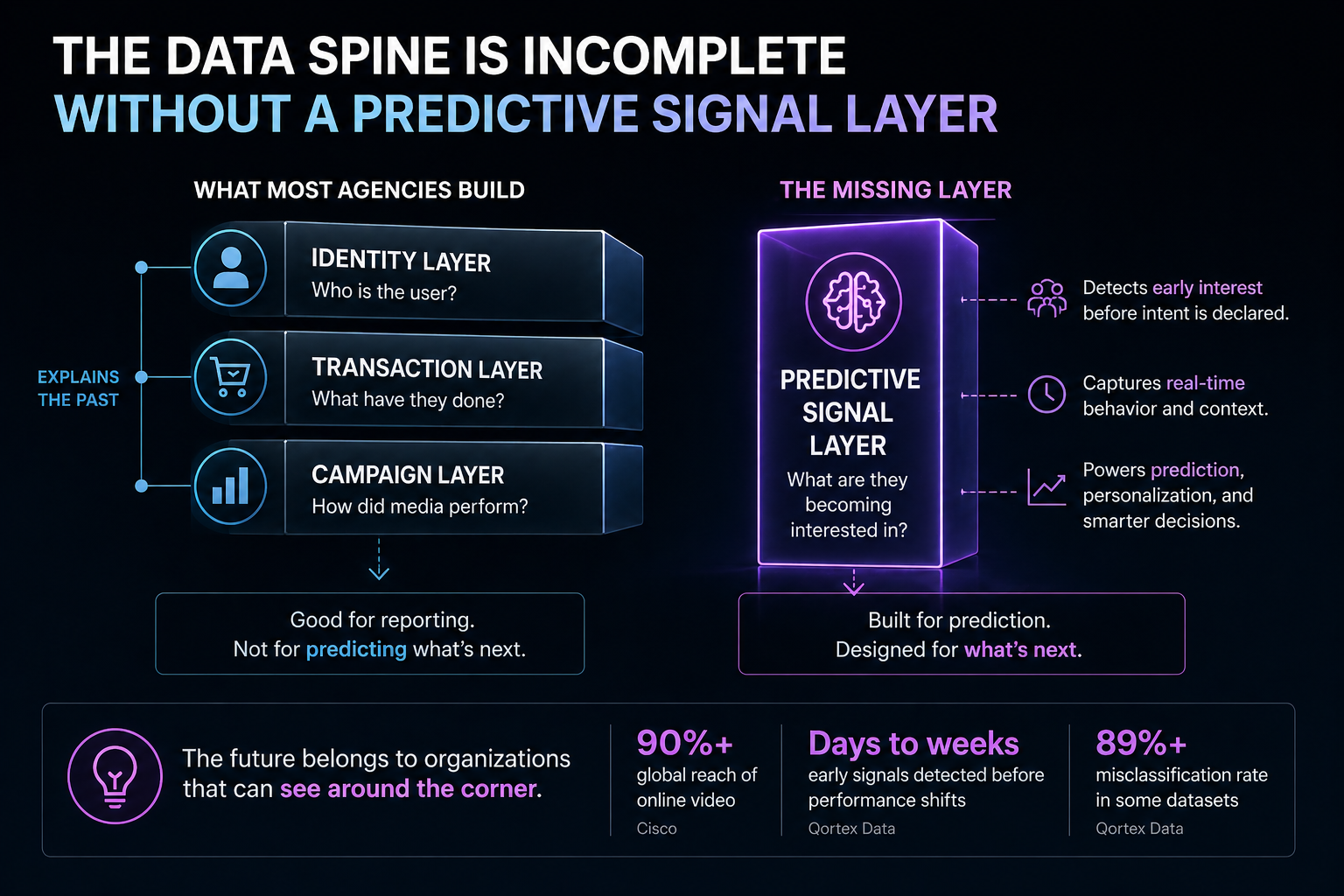
- Identity
- Transaction data
- Campaign performance
In other words, they’re structuring what already happened.
That’s valuable. But it’s not enough.
The Limitation No One Is Talking About
A data spine built on identity and transactions is inherently backward-looking.
It tells you:
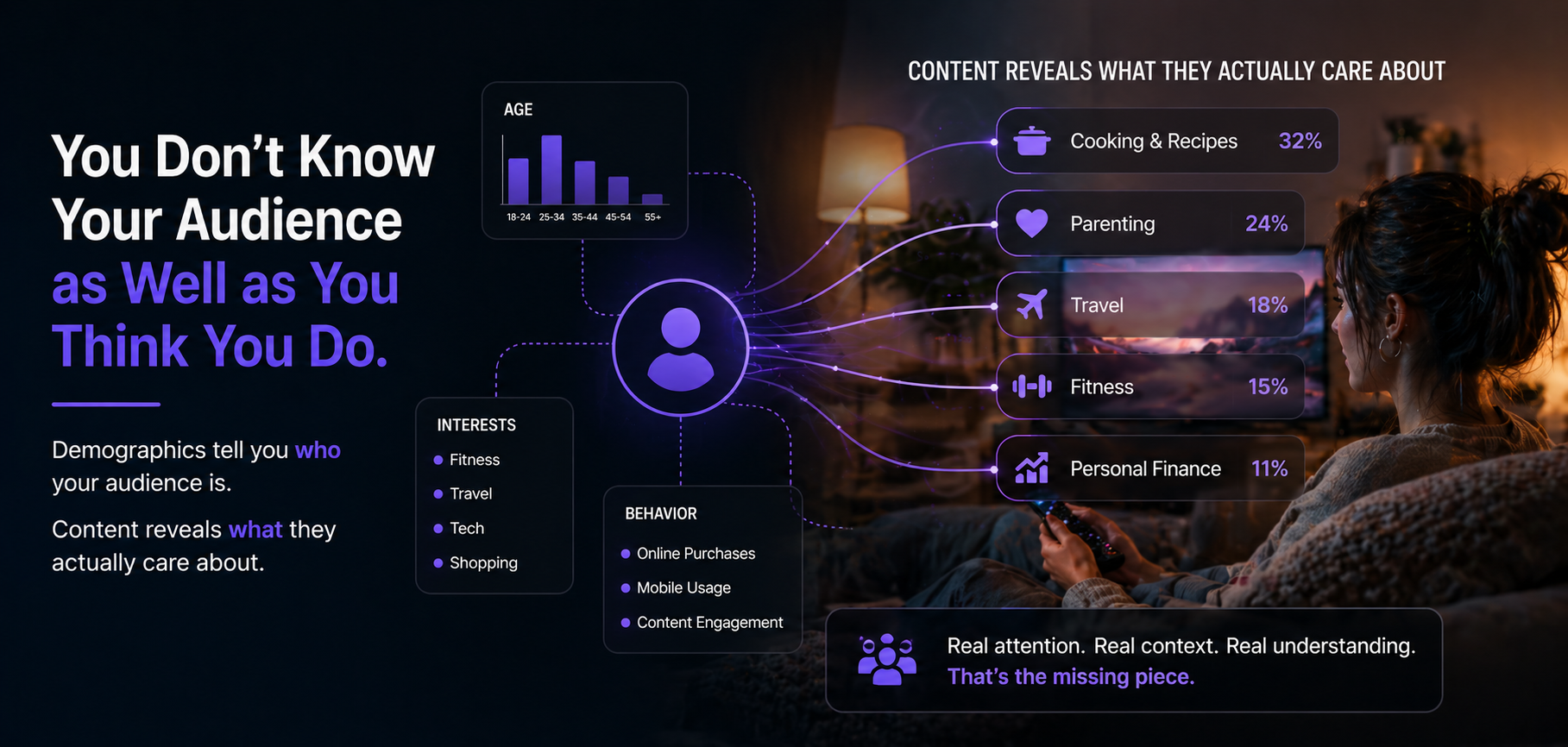
- Who someone is
- What they’ve done
- What they’ve purchased
But it doesn’t tell you what actually matters next:
What they’re becoming interested in.
That’s the gap.
Because the industry is no longer optimizing for targeting alone.
It’s shifting toward prediction.
From Targeting to Predicting
For years, media has been built on segments.
Demographics. Interests. Lookalikes.
All proxies for intent.
But those proxies are breaking down.
- Signal loss has reduced attribution visibility by 25 to 60%
- 75% of media buyers are now prioritizing first-party data strategies
- Broad targeting is outperforming interest targeting in the majority of campaigns
The takeaway is clear.
Static segments are losing relevance.
Dynamic signals are becoming the foundation.
Prediction Requires Leading Indicators
You can’t predict the future using lagging data alone.
Transactions and conversions are outcomes.
They happen after intent is already formed.
Prediction requires leading indicators.
Signals that show:
- Shifts in attention
- Changes in behavior
- Emerging interest
Before they show up in a purchase or a click.
Most data spines don’t have this layer.
Where Leading Signals Actually Live
One of the richest sources of leading indicators is hiding in plain sight.
Video.
Not just what someone watches, but:
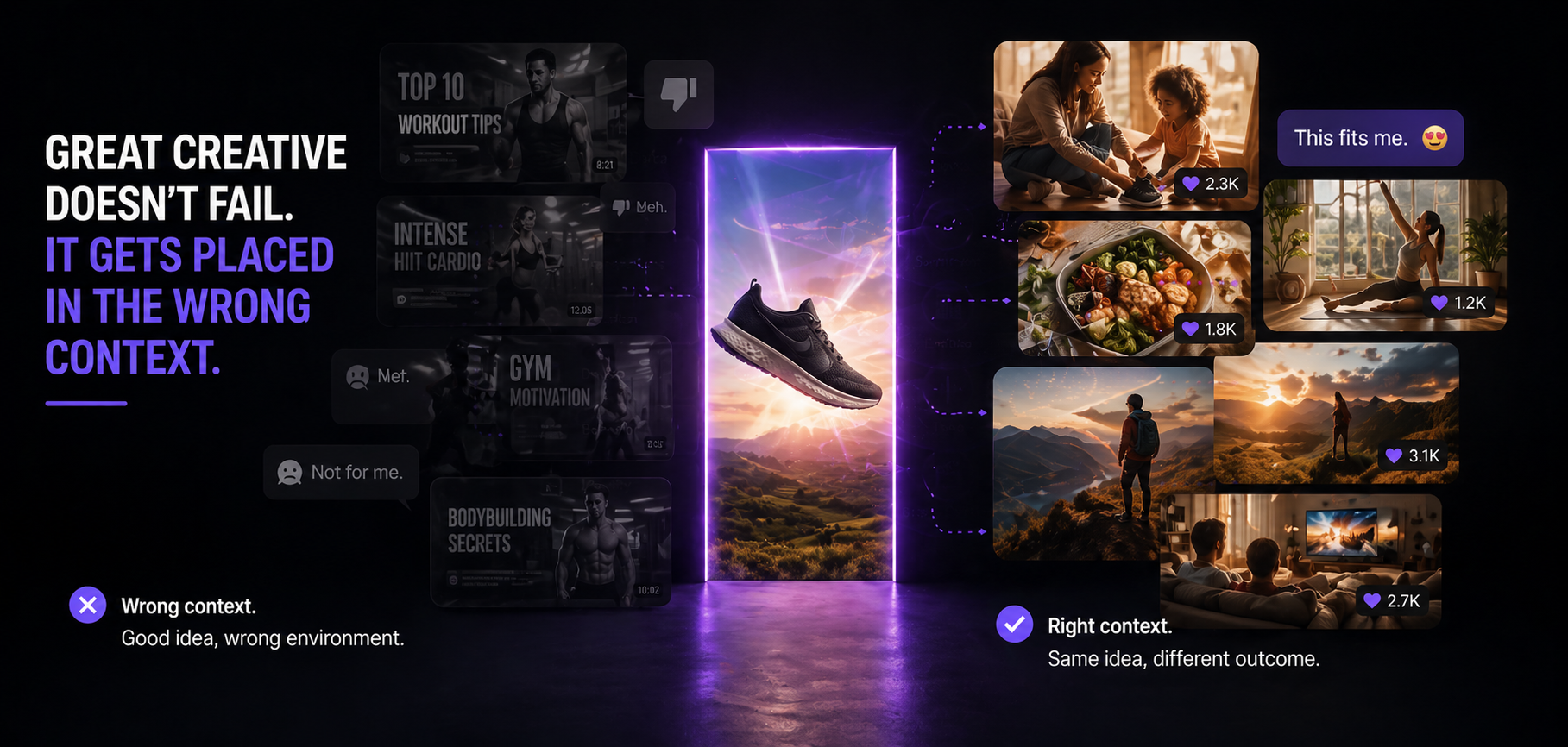
- The context of the moment
- The timing of engagement
- The emotional tone of the content
- The patterns forming across sessions
At scale.
Video consumption reflects real-time intent formation.
It shows what people are leaning into before they act on it.
That’s fundamentally different from identity or transaction data.
It’s directional, not historical.
Why This Gap Is About to Matter More
As automation increases, decisioning systems rely more heavily on inputs.
And most inputs today are still rooted in the past.
That creates a ceiling.
You can optimize efficiently, but only within what has already happened.
To move beyond that, systems need predictive signals.
Not just better organization.
Not just cleaner pipelines.
But a layer that captures emerging behavior as it forms.
The Next Evolution of the Data Spine
The future data spine isn’t just unified.
It’s predictive.
It connects:
- Identity
- Transactions
- Performance
With:
- Real-time signals
- Contextual understanding
- Behavioral momentum
Because the goal is no longer just to understand users.
It’s to anticipate them.
The Bottom Line
If your stack is built on identity and transactions alone, you’re organizing the past.
And in a market that’s moving toward continuous decisioning, that’s not a competitive advantage.
It’s table stakes.
The next advantage comes from prediction.
And prediction starts with signals. Get in touch with our team today if you'd like to add video, and true measures of intent, to your data spine.