That’s how the industry has operated for years. Demographics, behavioral segments, inferred intent signals. All designed to answer one question:
Who is this person?
But there’s a growing gap in that approach.
Because it doesn’t actually tell you what someone is paying attention to.
And that’s where things start to break down.
The difference between identity and attention
Audience data is built to describe people. It organizes them into segments, predicts behaviors, and assigns probabilities.
But it doesn’t capture what’s happening in the moment.
What someone chooses to watch. What they stay engaged with. What they skip.
That’s a completely different signal.
And when you start analyzing video at scale, that difference becomes obvious.
Two audiences that look identical on paper often behave very differently when you look at what they actually consume.
Not occasionally. Consistently.
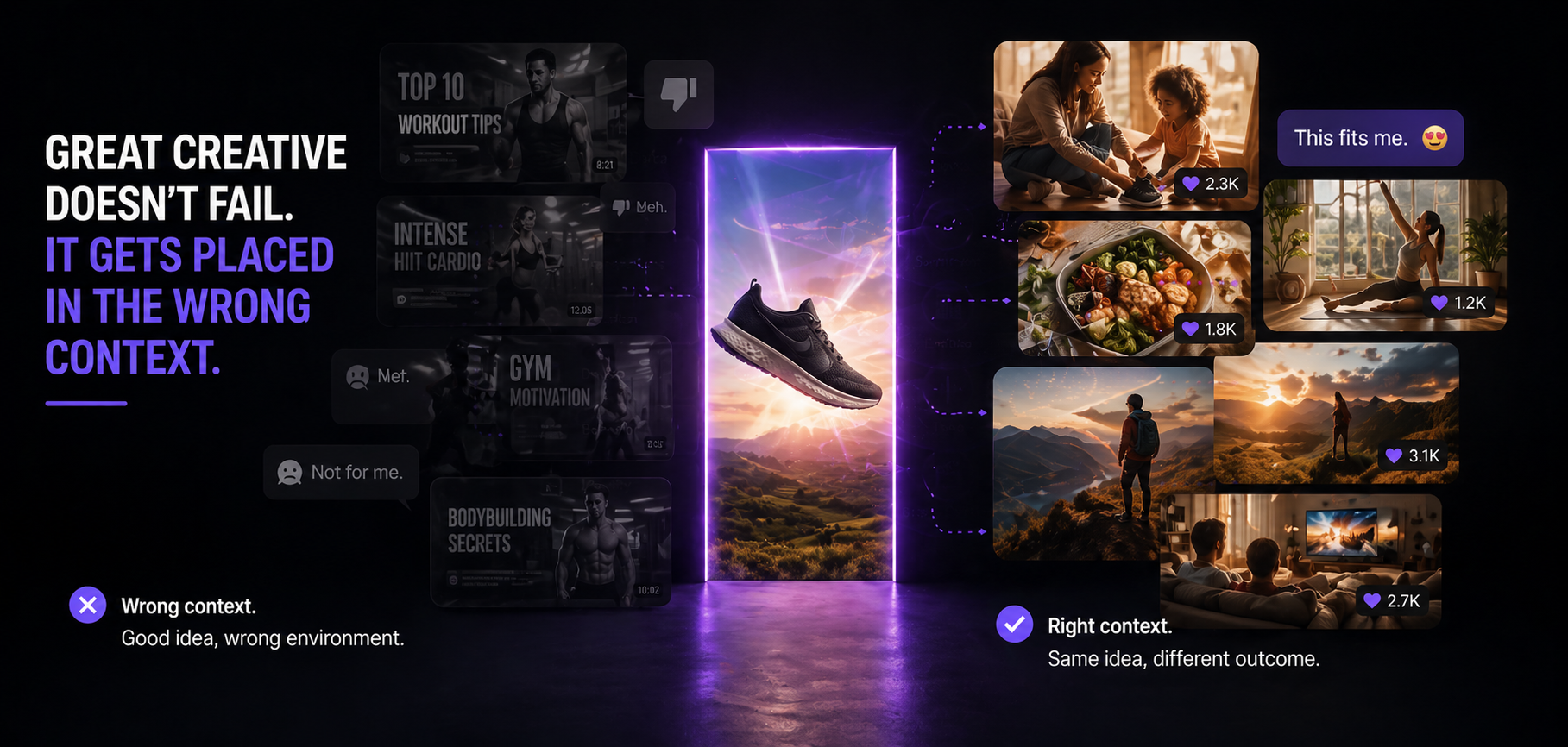
We’ve seen campaigns where a clearly defined target audience performed best in environments that didn’t traditionally align with that audience at all.
Not because the audience was wrong.
Because the understanding of that audience was incomplete.
The “black box” problem in video
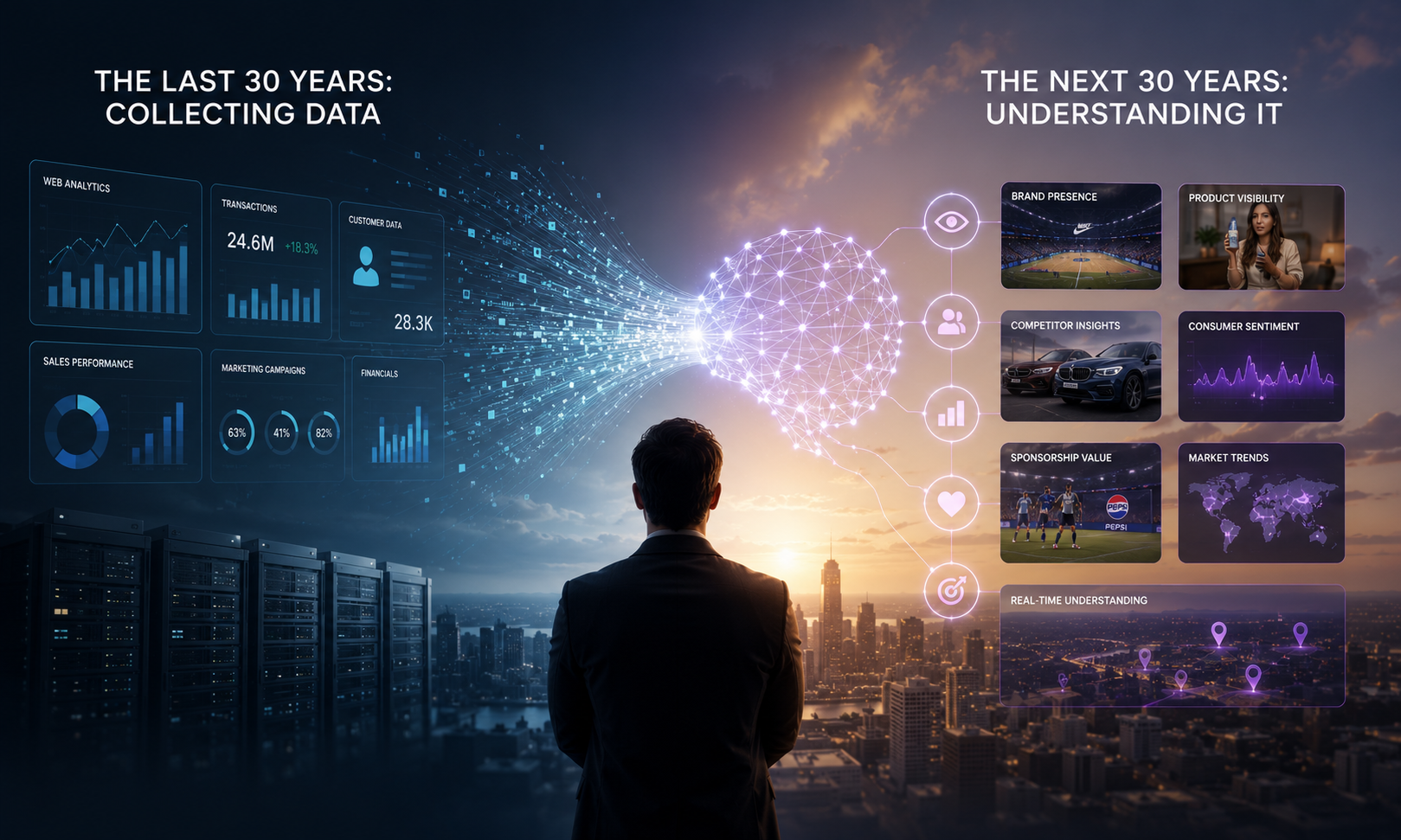
Video has become the dominant format online, yet for most marketers, it’s still largely a black box. Billions are spent on video, but the actual content inside those videos is rarely analyzed in a meaningful way.
Traditional targeting looks around the content. It assumes that context is defined by channel, category, or audience profile. But video doesn’t work that way.
Meaning lives at the moment level.
What’s happening on screen. The tone. The emotion. The action.
That’s what people respond to.
And until you can understand that, you’re missing a critical layer of insight.
What content signals actually reveal
When you shift from audience-first to content-first analysis, different patterns start to emerge.
You begin to see:
- What people actively choose to engage with
- How their interests show up in real contexts
- Where attention clusters across seemingly unrelated environments
This is exactly what Intelligent Video Analytics is built to uncover.
By analyzing video frame-by-frame across visuals, audio, and context, platforms like Qortex surface the signals that actually drive engagement and action.
Instead of asking, “Who is this person?” the question becomes:
What are they engaged with right now?
That shift changes everything.
Why attention is a stronger signal than identity alone
Attention is not static. It’s dynamic, contextual, and highly predictive of behavior.
It drives:
- Engagement
- Receptivity
- Purchase intent
And importantly, it often cuts across traditional audience definitions.
Two people in the same demographic segment might have completely different attention patterns. Conversely, people in entirely different segments might converge around the same types of content.
That’s where traditional strategies start to fall short.
Because identity doesn’t always explain behavior.
But attention often does.
From targeting audiences to understanding moments
This is where Qortex fundamentally shifts the model.
Rather than relying on user identifiers or demographic assumptions, Qortex analyzes content itself to identify the moments that drive outcomes.
Every frame becomes data.
Every moment becomes signal.
And those signals can be used to:
- Discover new audiences based on real engagement patterns
- Identify high-performing content environments
- Align messaging with moments that actually resonate
It’s not about replacing audience strategy.
It’s about grounding it in something more precise.
A more complete view of your audience
Most teams aren’t wrong about who their audience is.
They’ve done the research. Built the segments. Validated the profiles.
But those definitions are incomplete without understanding attention.
When you combine:
- Who someone is
- With what they actually engage with
You get a much clearer picture of:
- Where they show up
- What resonates in real time
- How to reach them effectively
And often, that picture looks very different from what you expected.
The shift that’s already happening
As the industry moves away from identifiers and toward privacy-first strategies, this shift becomes even more important.
Content is no longer just the environment.
It’s the signal.
Qortex turns video into an intelligence layer, connecting content directly to performance outcomes and enabling marketers to act on what actually drives behavior.
That’s the missing piece.
Because in the end, people don’t engage with segments, they engage with moments.