What Cooking Content Can Teach Us About High-Intent Audiences
One of the more unexpected patterns we’ve seen in campaign performance is this:
Cooking content outperforming basketball content for Nike campaigns. By nearly 4x.
Not marginally better. Significantly better.
At first glance, it doesn’t make sense. A sports brand should perform best alongside sports content. That’s how most targeting strategies are designed.
But when you look at behavior instead of categories, the picture changes.
The problem with category-based thinking
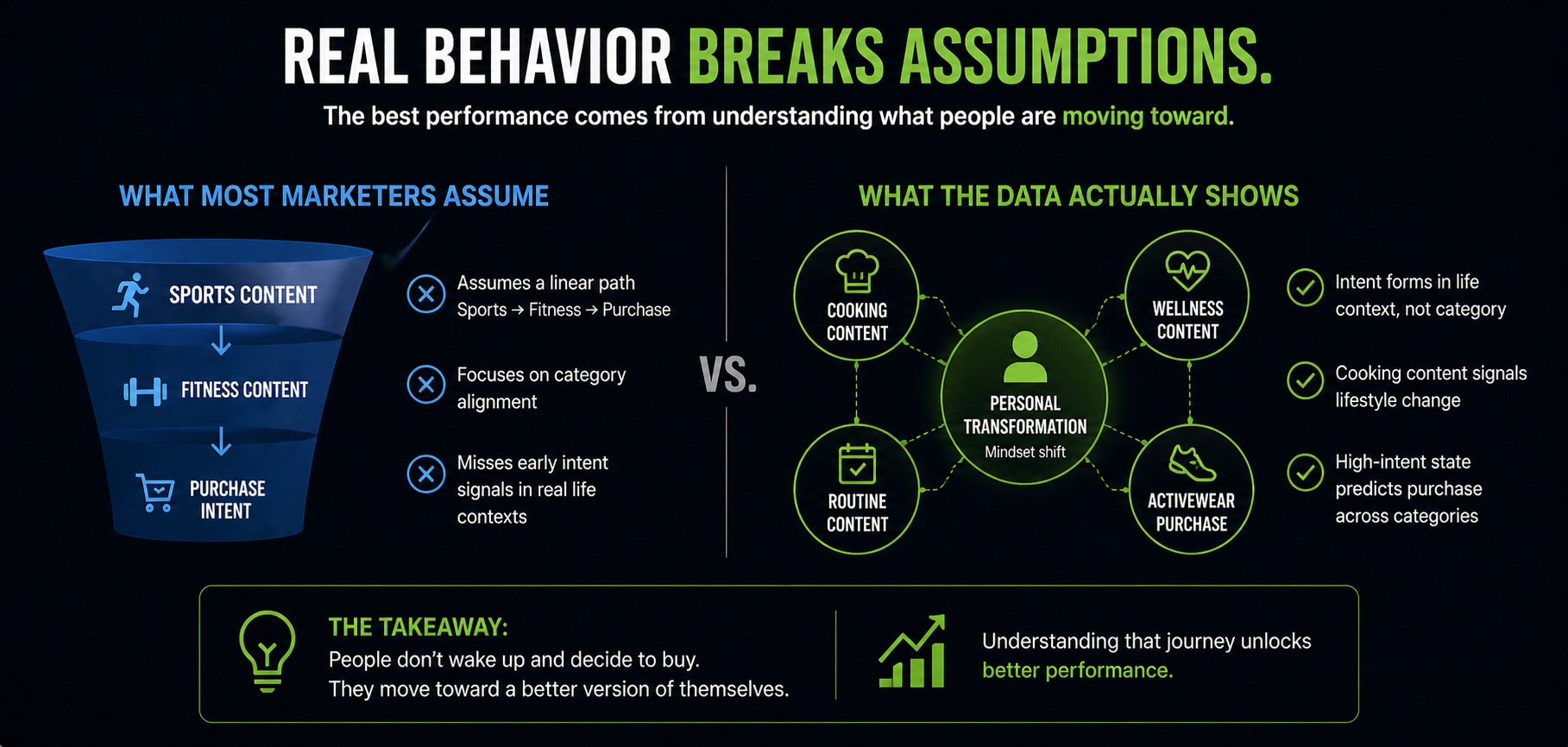
Traditional targeting tends to follow clean, logical assumptions:
Sports viewer equals athlete.
Fitness viewer equals buyer.
Category alignment equals relevance.
It’s structured. Predictable. Easy to scale.
But real behavior doesn’t follow those rules.
People don’t consume content in neatly defined categories that map directly to purchase intent. They move through different states throughout the day, often driven by what they’re trying to do or become in that moment.
And that’s where the disconnect starts.
What’s actually happening in those moments
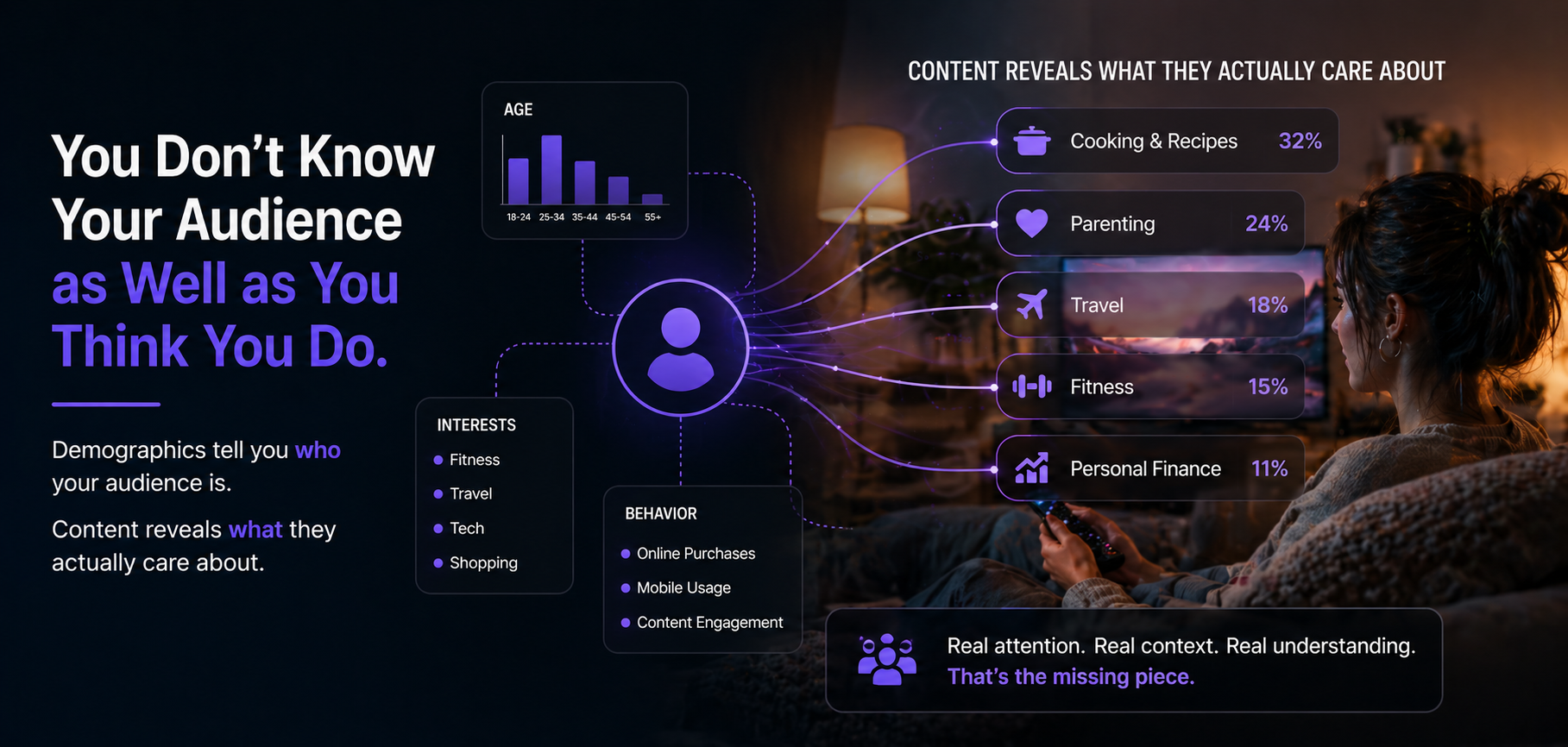
Someone watching cooking content isn’t just watching recipes.
They’re often engaging with:
Meal prep routines
Health-focused lifestyle changes
Habit-building content
Transformation journeys
That’s not passive viewing.
It’s active intent.
They’re trying to improve something. Change something. Become a different version of themselves.
And that mindset carries over into how they respond to messaging.
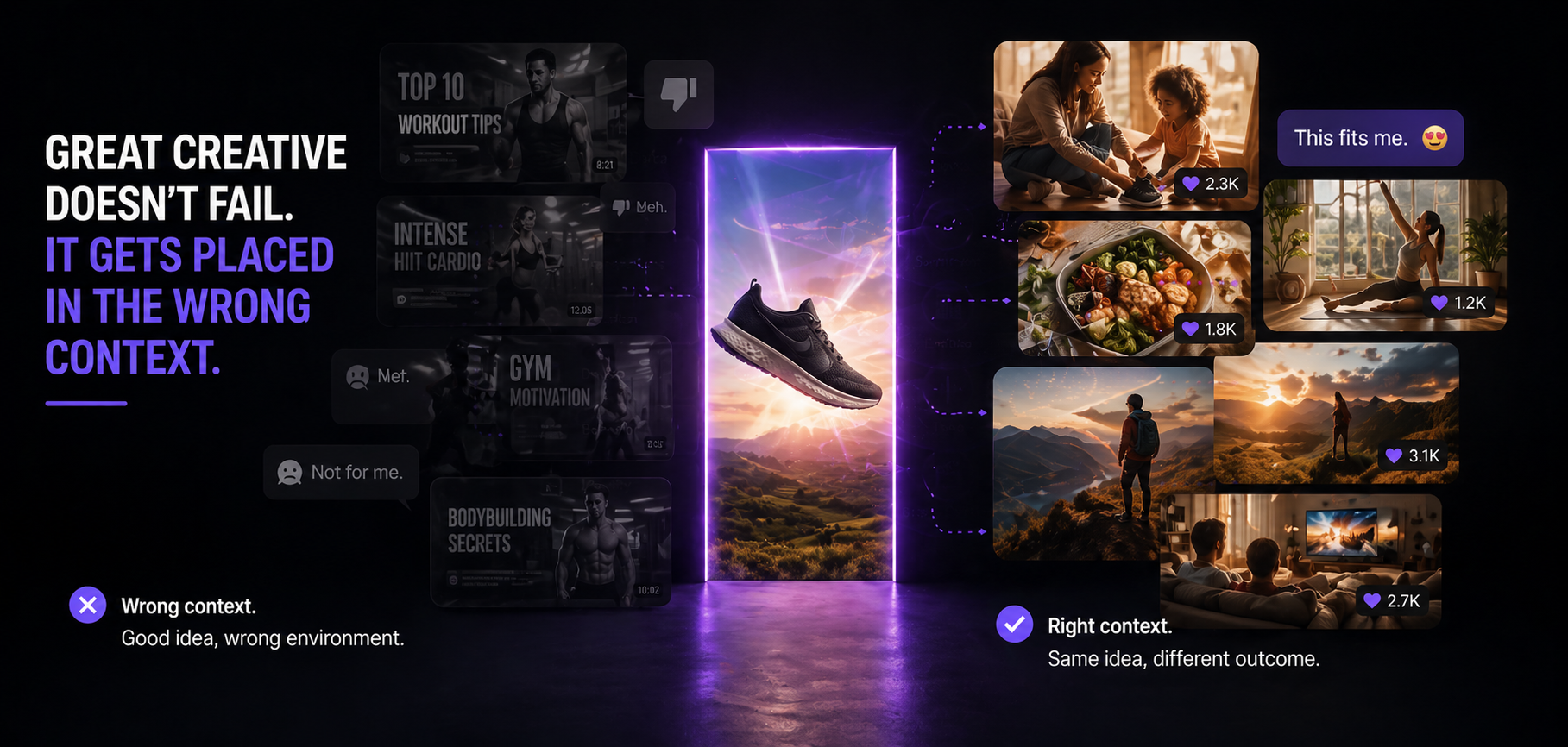
A Nike ad in that environment doesn’t feel like a stretch. It fits into a broader narrative around self-improvement, discipline, and progress.
In many cases, it resonates more than it would in a traditional sports environment, where the viewer may be more focused on entertainment than change.
Behavior over assumptions
This is where many strategies fall short.
They rely on who someone is supposed to be, rather than what they’re actually doing.
On paper, a sports viewer looks like the ideal audience for an athletic brand.
In reality, that viewer could be:
Casually watching highlights
Distracted during a game
Consuming content with no immediate intent to act
Meanwhile, someone outside that category might be in a much more actionable mindset.
The difference isn’t identity.
It’s behavior.
Where the real gains come from
The biggest performance gains we’ve seen don’t come from refining audience segments.
They come from understanding behavior at a deeper level.
Looking at:
What people are actively engaging with
What kind of mindset that content creates
Where moments of intent actually show up
Because intent isn’t always tied to category. It’s tied to context.
And when you start identifying those patterns, entirely new opportunities emerge.
Rethinking how you define “the right audience”
This doesn’t mean audience strategy goes away.
It means it evolves.
Instead of starting and ending with:
Who is this person?
The more useful question becomes:
What are they doing right now?
What are they trying to achieve?
What mindset are they in?
Those signals often tell you far more about how someone will respond than any predefined segment.
The takeaway
Cooking content outperforming basketball content isn’t an anomaly.
It’s a signal.
A signal that behavior doesn’t always align with assumptions. That intent shows up in unexpected places. That context shapes outcomes more than category alone.
For brands, the opportunity is clear.
Stop optimizing only for who the audience is supposed to be.
Start understanding what they’re actually doing.
Because that’s where performance lives.