Most systems today are trained on the same core inputs:
Past campaign performance
Conversion data
Audience segments
On the surface, that makes sense. These are measurable, widely available, and easy to operationalize.
But they all share the same limitation.
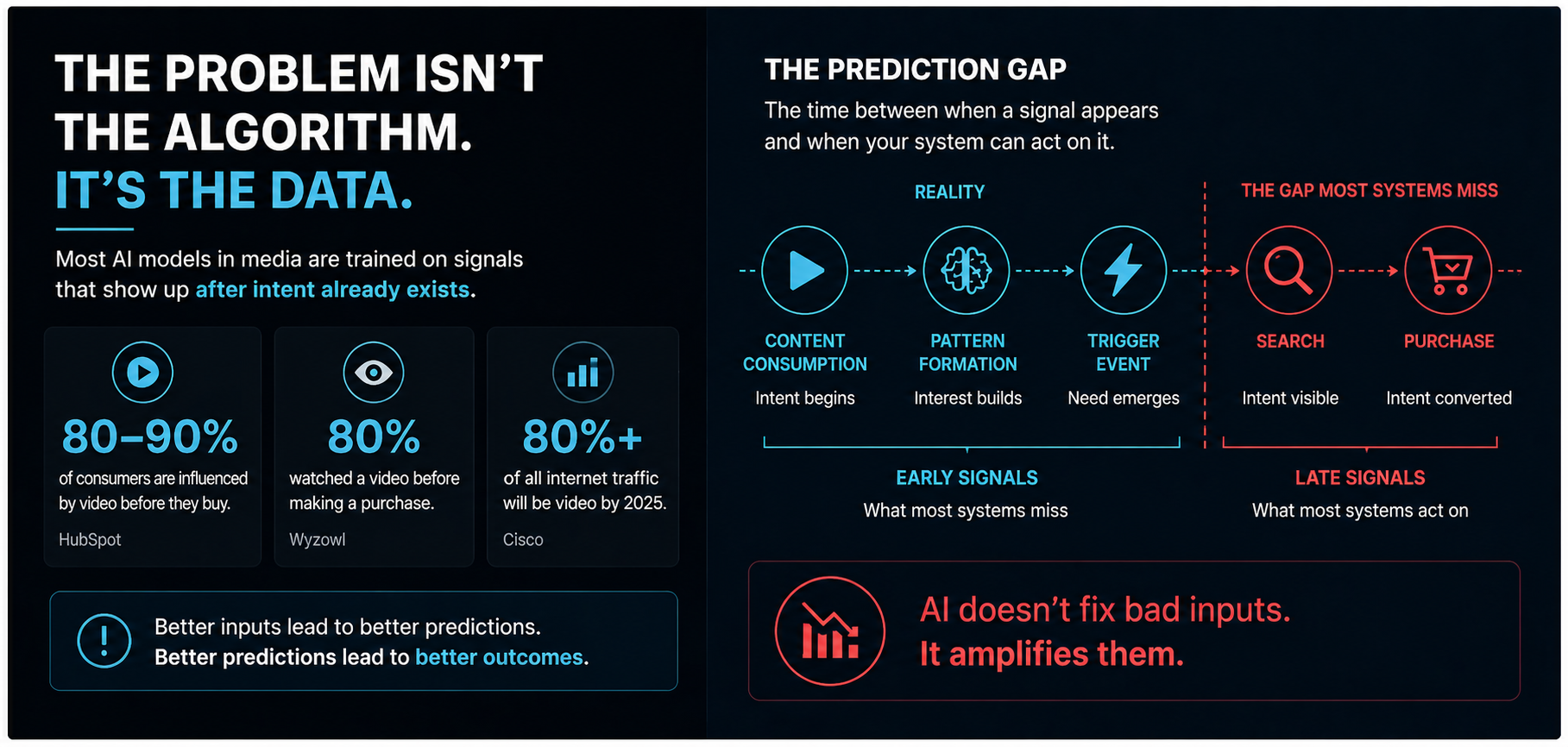
They show up after intent already exists.
The problem with backward-looking intelligence
Conversion data tells you what happened.
Campaign performance tells you what worked.
Audience segments tell you who was likely involved.
None of them explain how intent was formed in the first place.
They’re reflections of behavior, not drivers of it.
So when AI is layered on top of these systems, it’s not fundamentally changing how decisions are made.
It’s accelerating them.
Optimizing them.
Scaling them.
But only within the same constraints.
Which means, in many cases, you’re not getting better decisions.
You’re getting faster optimization of the wrong thing.
The gap hiding in plain sight
There’s a stat that’s hard to ignore:
Roughly 80 to 90 percent of consumers are influenced by video before making a purchase decision.
That influence happens upstream. Before the click. Before the conversion. Before most systems ever register intent.
And yet, video consumption is rarely treated as a core input into decisioning models.
Not at a meaningful level.
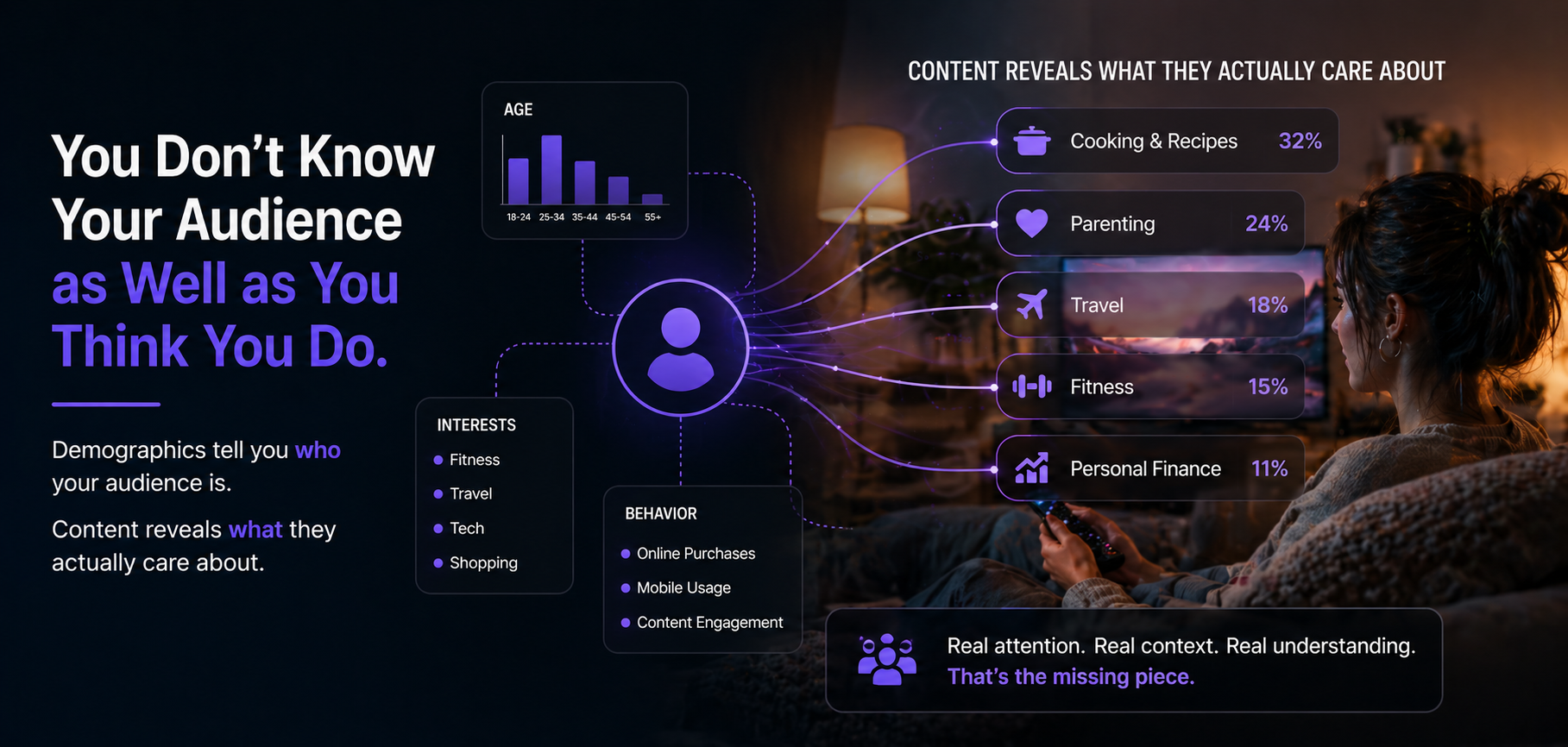
Not in a way that captures what people are actually watching, how they’re engaging, or what those moments signal about behavior.
That’s not a small oversight.
It’s a structural gap.
What AI is missing
AI models are only as effective as the data they learn from.
If the inputs are incomplete, the outputs will be too.
Right now, most models are learning from outcomes instead of signals.
They’re trained on what people did, not what led them there.
That makes it harder to identify emerging intent. Harder to adapt in real time. Harder to understand why something is working beyond surface-level correlations.
And in a world where behavior is increasingly shaped by content, that limitation becomes more pronounced.
Rethinking the inputs
The conversation around AI often focuses on capability.
How to make models smarter. Faster. More efficient.
But the more important question is simpler.
What should these models actually be learning from?
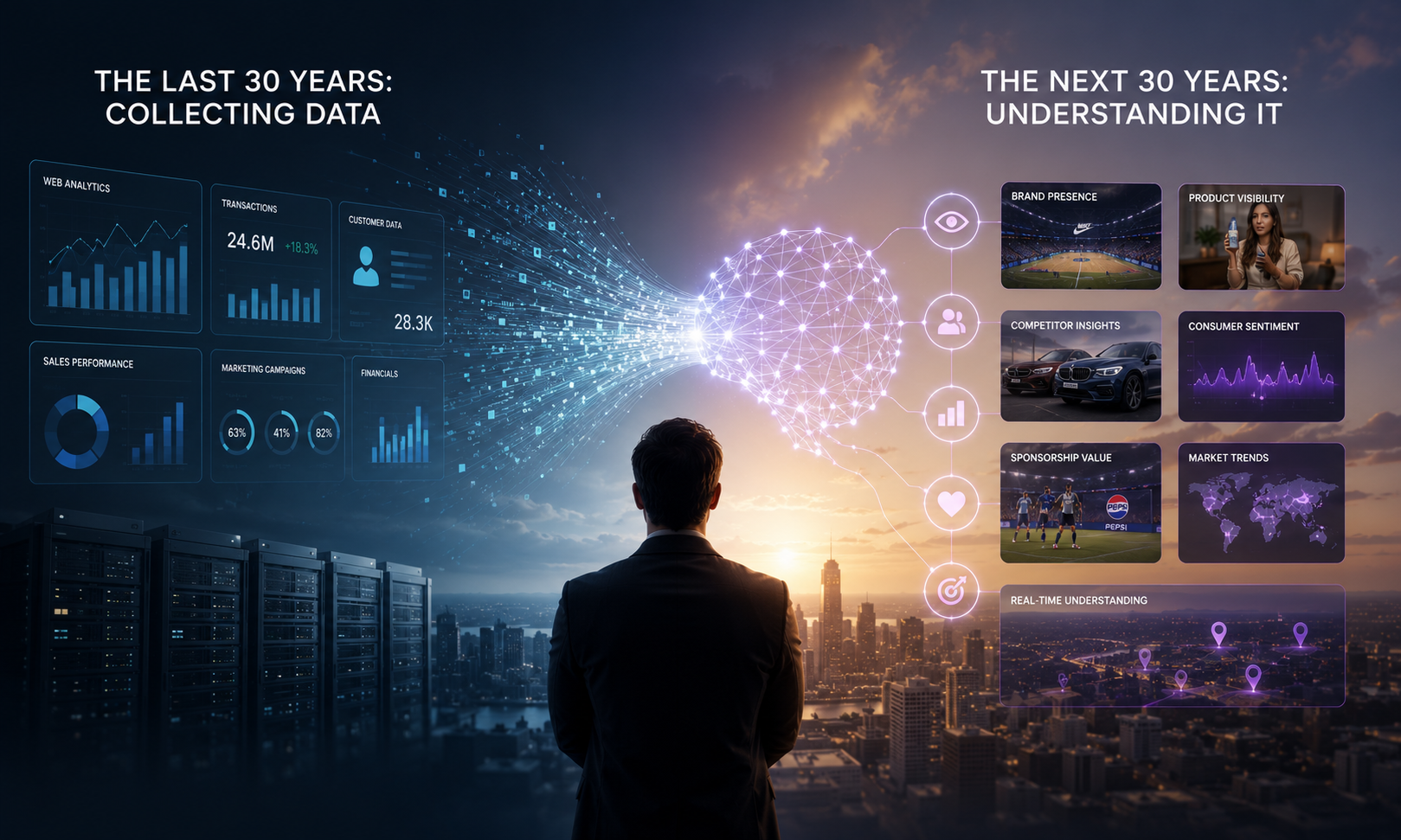
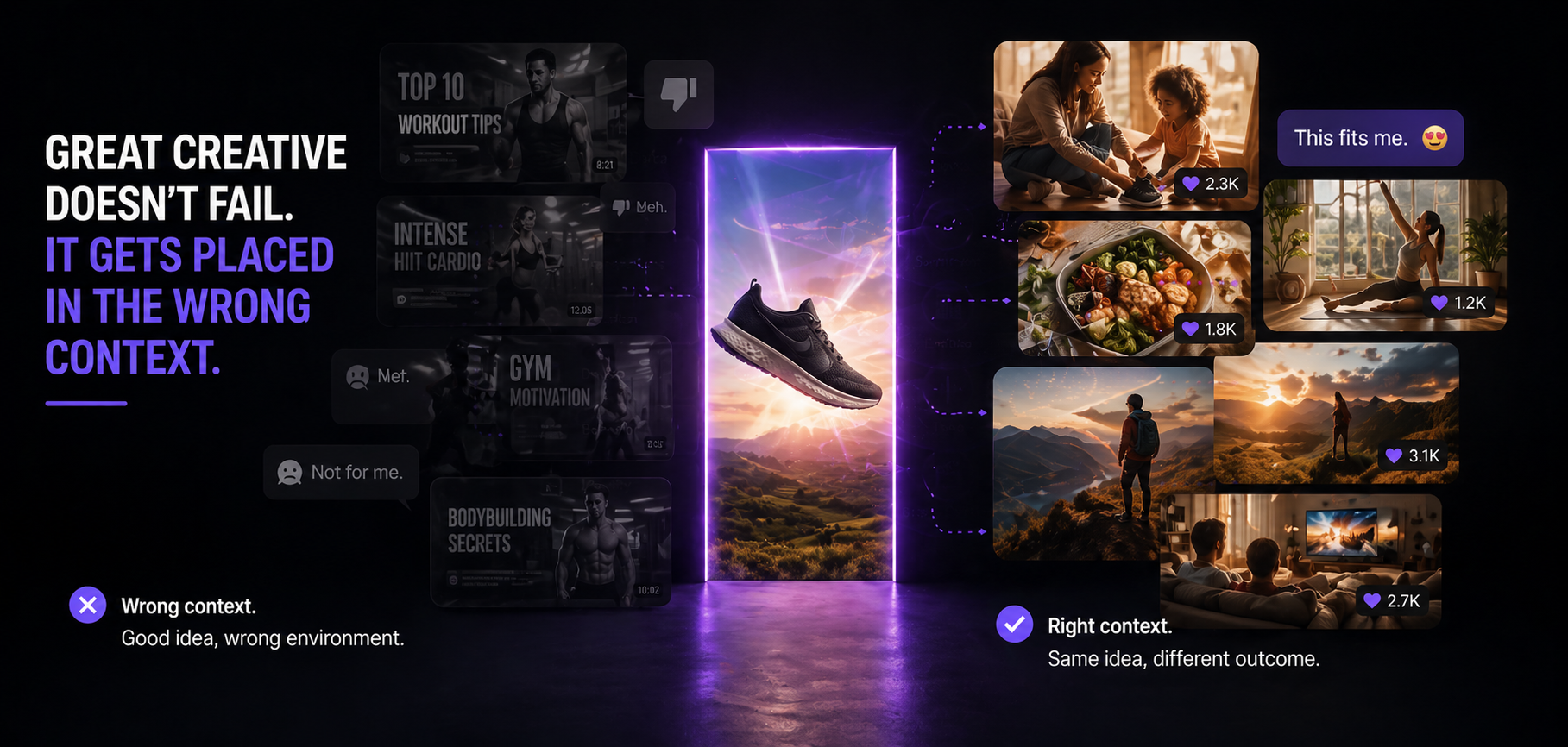
If video is where attention is formed, where preferences are shaped, and where intent begins to take shape, then it should play a much larger role in how systems are trained.
Not as a secondary signal.
As a foundational one.
A different way to think about intelligence
This is where the shift starts to happen.
When you move from outcome-based inputs to behavior-based signals, you begin to see patterns earlier.
You understand not just what people did, but what influenced them to do it.
That opens up new possibilities:
Identifying intent before it’s fully formed
Aligning messaging with real-time engagement
Optimizing toward signals that actually drive behavior
And that’s where AI starts to become meaningfully more effective.
The bottom line
AI, on its own, isn’t the advantage.
Better inputs are.
Because no matter how advanced the model is, it can only learn from what it’s given.
And if the most influential layer of behavior is missing from that dataset, the system will always be working with an incomplete picture.
The opportunity isn’t just to improve how AI operates.
It’s to rethink what it’s built on.
And for teams looking at video through a deeper lens, that’s exactly where things start to change.