Search Is Where Intent Becomes Visible. Not Where It Starts.
Search has long been treated as the clearest signal of intent.
Someone types in a query, and suddenly their interest becomes measurable, targetable, actionable.
But by the time that happens, something important has already occurred.
Intent didn’t start there.
It just became visible.
Rethinking the intent timeline
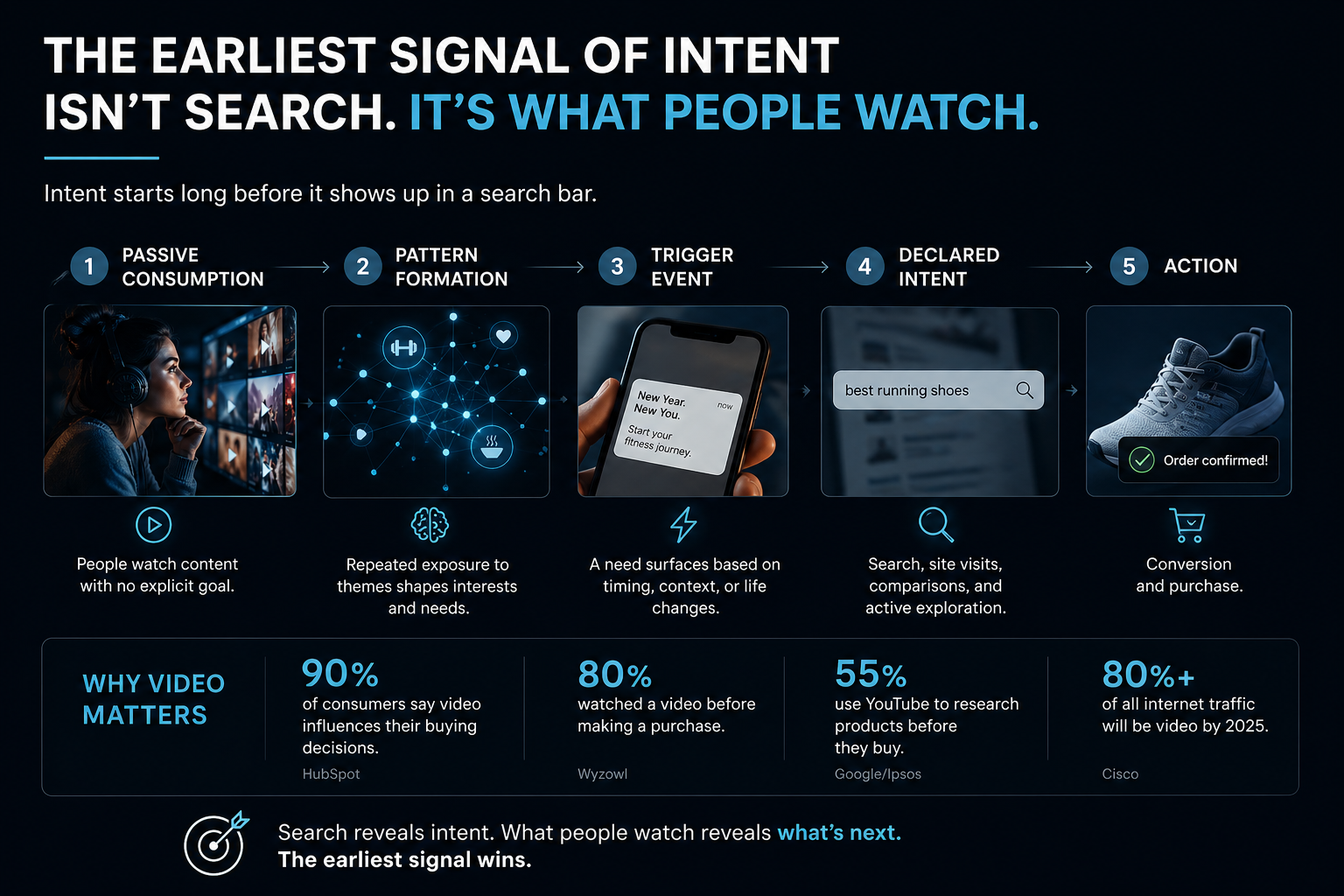
A more useful way to think about intent looks like this:
Passive content consumption
Pattern formation
Trigger event
Search
Purchase
Most of the industry is built around the last two steps.
Search and purchase.
That’s where budgets concentrate. That’s where optimization happens. That’s where performance is measured.
Which also means that’s where competition is the highest.
Because by that point, demand already exists.
Everyone is reacting to the same signal.
What happens before search
The more interesting question is what happens earlier.
Before someone searches, they’re consuming content. Not randomly, but in patterns.
At scale, those patterns become clear.
Interests begin to cluster. Behaviors repeat. Signals start to form days or even weeks before search behavior changes.
And this is where things get overlooked.
Because those early signals don’t look like traditional intent.
They don’t come in the form of keywords or clicks.
They show up in what people choose to watch.
Where “unexpected audiences” come from
When you analyze video consumption at scale, certain patterns appear consistently.
Audiences that don’t seem like obvious fits start showing strong signals of intent.
Not occasionally. Repeatedly.
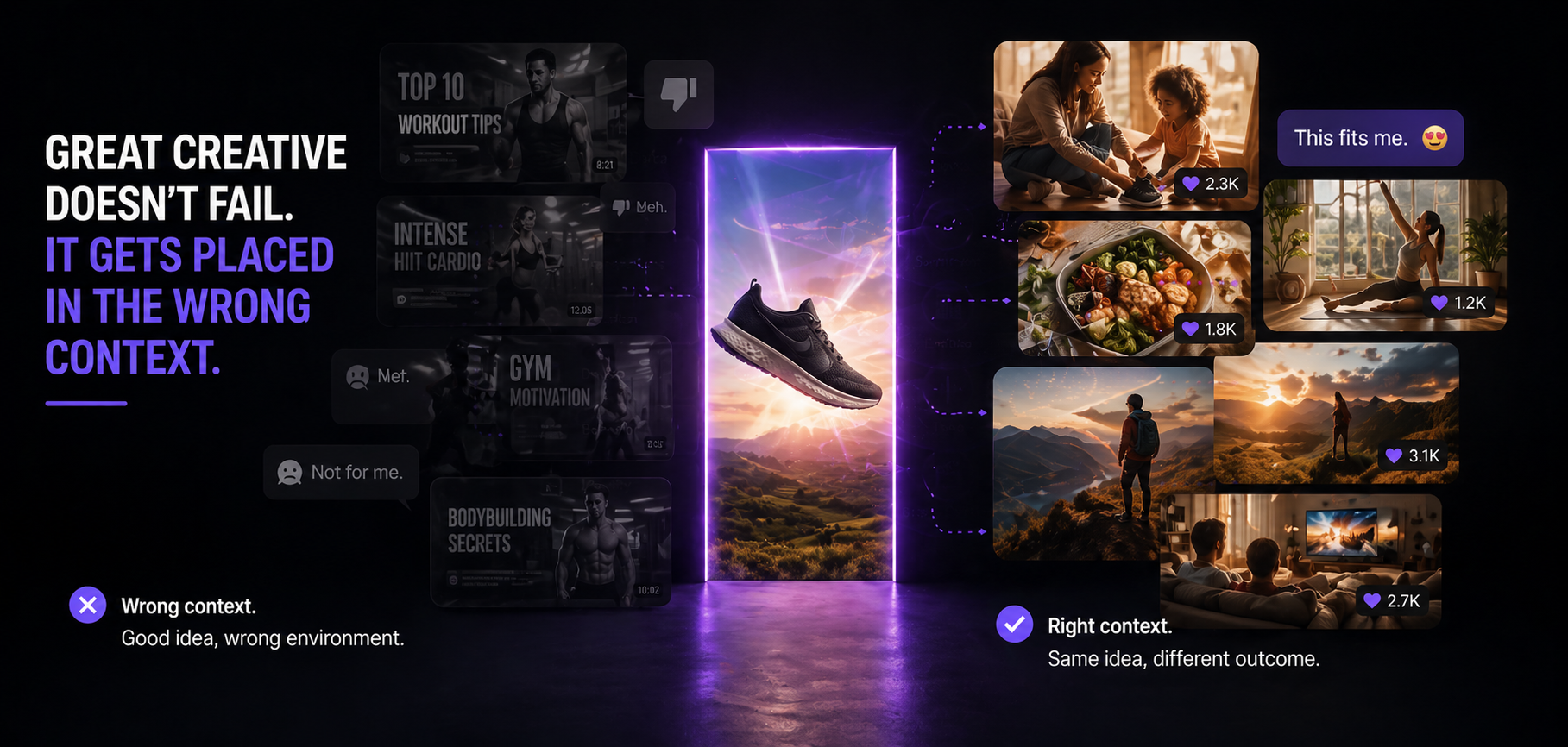
And it usually comes down to context.
Someone watching:
Meal prep content
Morning routines
Fitness transformations
Is often closer to a purchase moment for a brand like Nike than someone watching basketball highlights.
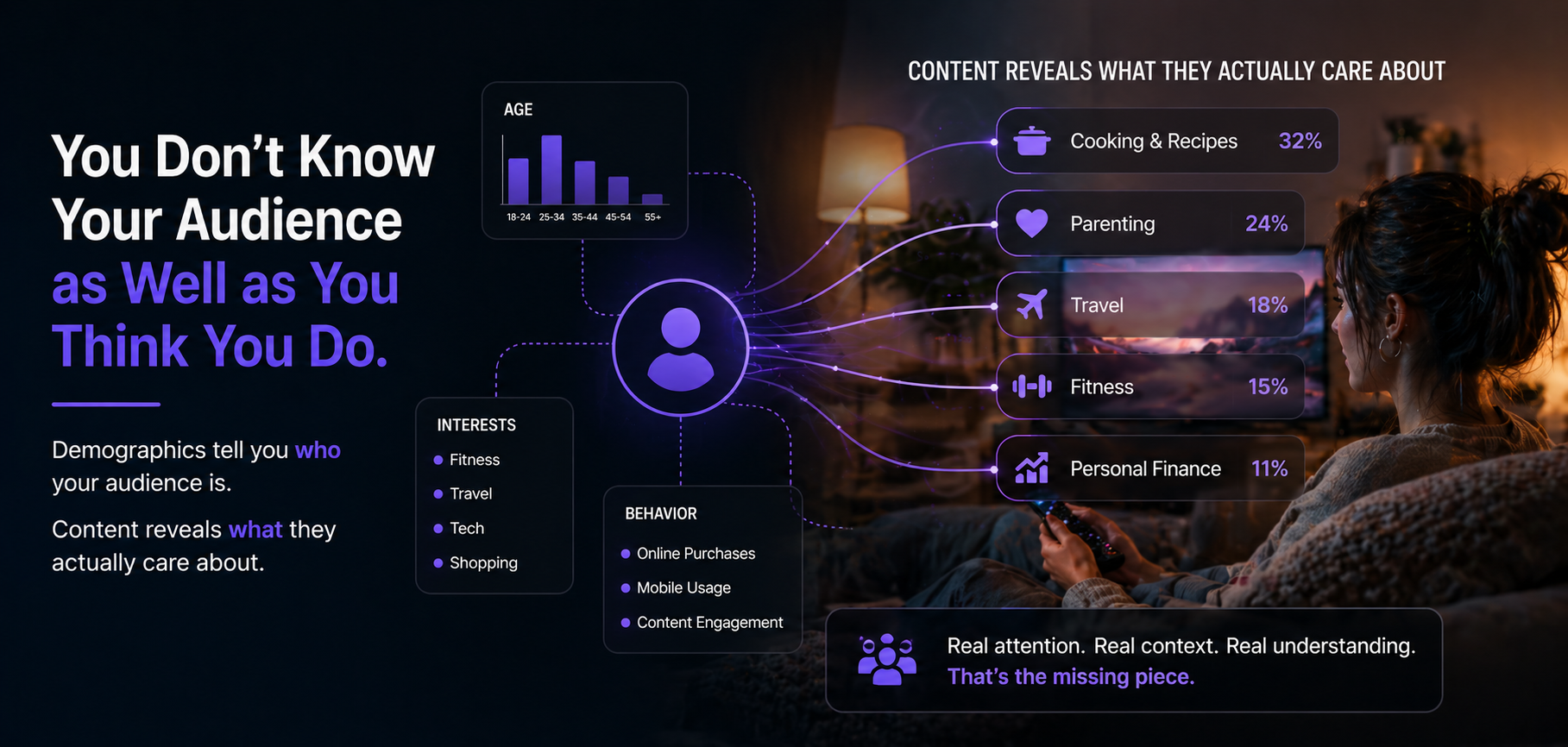
That doesn’t show up in demographic data.
It doesn’t align cleanly with traditional categories.
But it reflects behavior in a way those systems don’t capture.
Because one viewer is in a state of change.
The other is often in a state of entertainment.
Why the industry is late to this signal
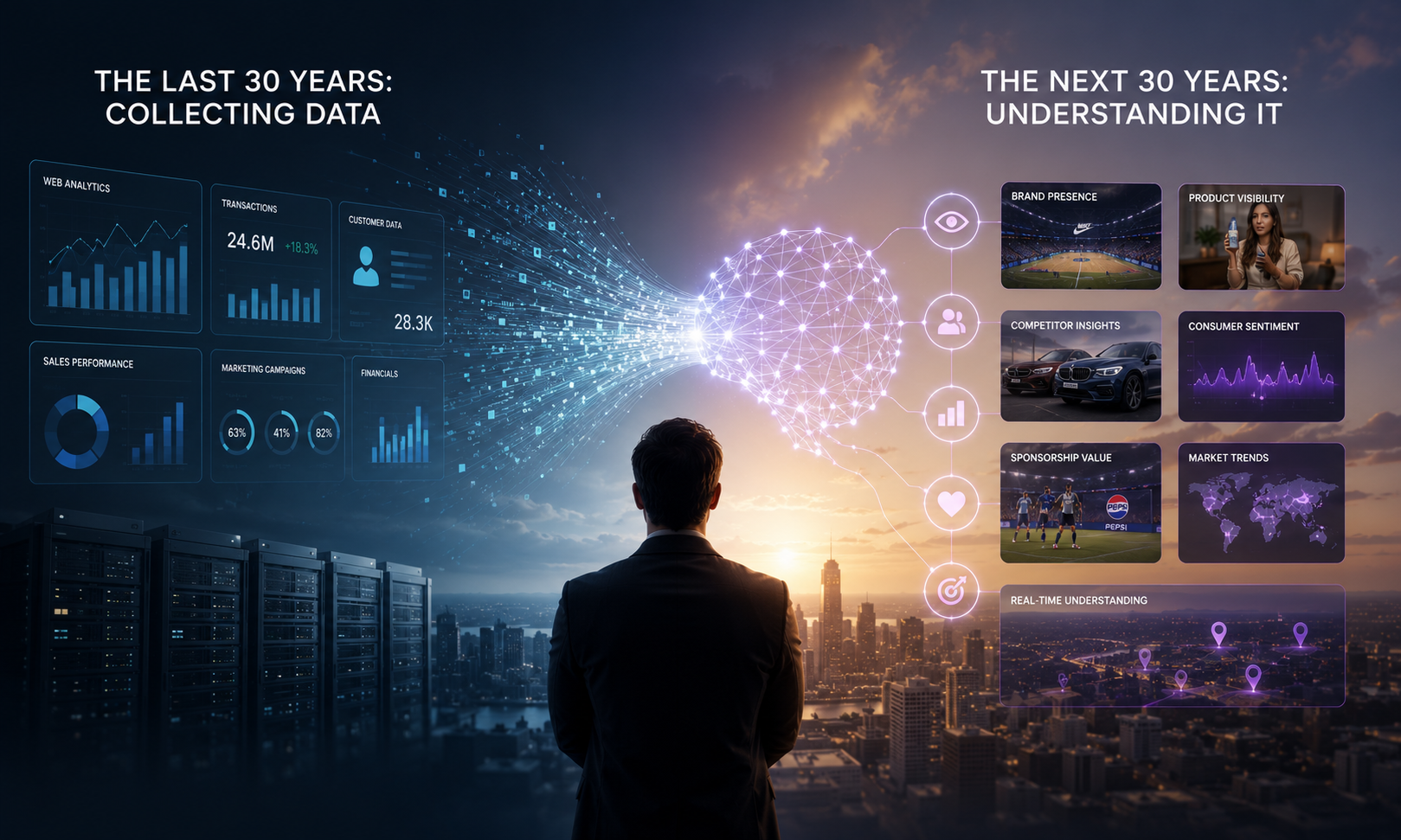
Most systems are designed to react to explicit intent.
Search queries. Site visits. Conversions.
They’re clean. Easy to measure. Easy to optimize.
But they’re also delayed.
By the time those signals appear, the decision process is already underway.
And brands are left competing in the most crowded part of the funnel.
The earlier signals are harder to capture, but far more valuable.
Because they show intent forming, not just intent declared.
The role of AI in all of this
AI is already shaping how media decisions are made.
That’s not a future state. It’s happening now.
But the effectiveness of those systems comes down to one thing.
What signal they’re learning from.
If AI is trained on search and conversion data, it will optimize around visible intent.
If it’s trained on content consumption and behavioral patterns, it can start to identify intent earlier.
That changes how decisions are made.
It changes where budgets go.
And it changes who wins.
The real advantage
The biggest advantage won’t come from having better models.
It will come from having access to better signals.
Signals that reflect how intent actually forms.
Signals that show what people are paying attention to before they take action.
Because whoever understands that earliest layer of intent has a completely different level of influence.
Not just on performance.
But on everything that happens next.