
Black Friday Isn’t One Audience: How AVI Finds Holiday Shoppers Before They Search
Black Friday audiences look obvious from a distance.
They want deals. They are ready to shop. They are waiting for the right discount.
But that definition collapses millions of different motivations into a single audience label. A parent comparing tablets for a child, a home cook researching an espresso machine, and a gamer watching console reviews may all make a purchase during Black Friday. They are not interested in the same products, responding to the same message, or watching the same content.
Treating them as one audience may create reach. It does not necessarily create relevance.
The opportunity begins earlier than the sale itself—and it appears in the video content people choose to watch.
Purchase intent does not begin with “Black Friday”
By the time someone searches for a specific Black Friday deal, much of the consideration process may have already happened.
People spend the weeks leading into the holiday shopping season watching:
- Product comparisons and reviews
- Unboxings and demonstrations
- Holiday gift guides
- Recipes and entertaining ideas
- Home decorating and improvement content
- Beauty tutorials and seasonal routines
- Travel inspiration and destination guides
- Gaming previews and technology news
These videos may never use the words “Black Friday.” Their titles and metadata may not identify the viewer as a holiday shopper. But the content can still reveal the interests, needs, and consideration signals shaping a future purchase.
This is where broad seasonal targeting begins to break down.
Keywords can identify a topic. Demographics can describe a person. Neither fully explains the moment that person is experiencing—or what within the video is holding their attention.
One shopping season contains many audiences
There is no single Black Friday mindset. Holiday purchase consideration shows up across a range of distinct contextual audiences.
The technology upgrader
This audience may be watching laptop comparisons, smartphone reviews, smart-home demonstrations, or videos explaining the differences between television models. The relevant signal is not simply “technology.” It could be a focus on performance, compatibility, convenience, price, or replacing an older device.
The holiday host
Hosting intent can appear in recipe videos, tablescape tutorials, cleaning content, home décor, small-appliance demonstrations, and advice for preparing a guest room. Retailers, food and beverage brands, home-goods companies, and delivery services could all be relevant—but for different reasons.
The parent and family gift buyer
Parents may watch toy reviews, family travel videos, educational content, gaming demonstrations, or age-specific gift guides. Understanding what is happening within that content helps separate a general family audience from someone actively evaluating a category or product.
The beauty and wellness shopper
Seasonal makeup, skincare routines, fragrance reviews, fitness content, and self-care videos can reflect very different needs. Some viewers are shopping for gifts. Others are planning for events, establishing winter routines, or purchasing for themselves.
The traveler
Holiday travel audiences can emerge through destination content, packing guides, airport advice, hotel reviews, road-trip planning, and travel-product demonstrations. They may be considering a trip, preparing for one already booked, or looking for a gift related to travel.
The self-gifter
Not every Black Friday purchase is destined for someone else. Fashion inspiration, hobby content, gaming videos, home projects, and product reviews can all indicate a viewer exploring something for themselves. Messaging built exclusively around gifting may miss this motivation entirely.
Each of these audiences can participate in Black Friday. What connects them is not a generic interest in discounts. It is the content revealing what matters to them before the transaction happens.
AVI looks inside the video
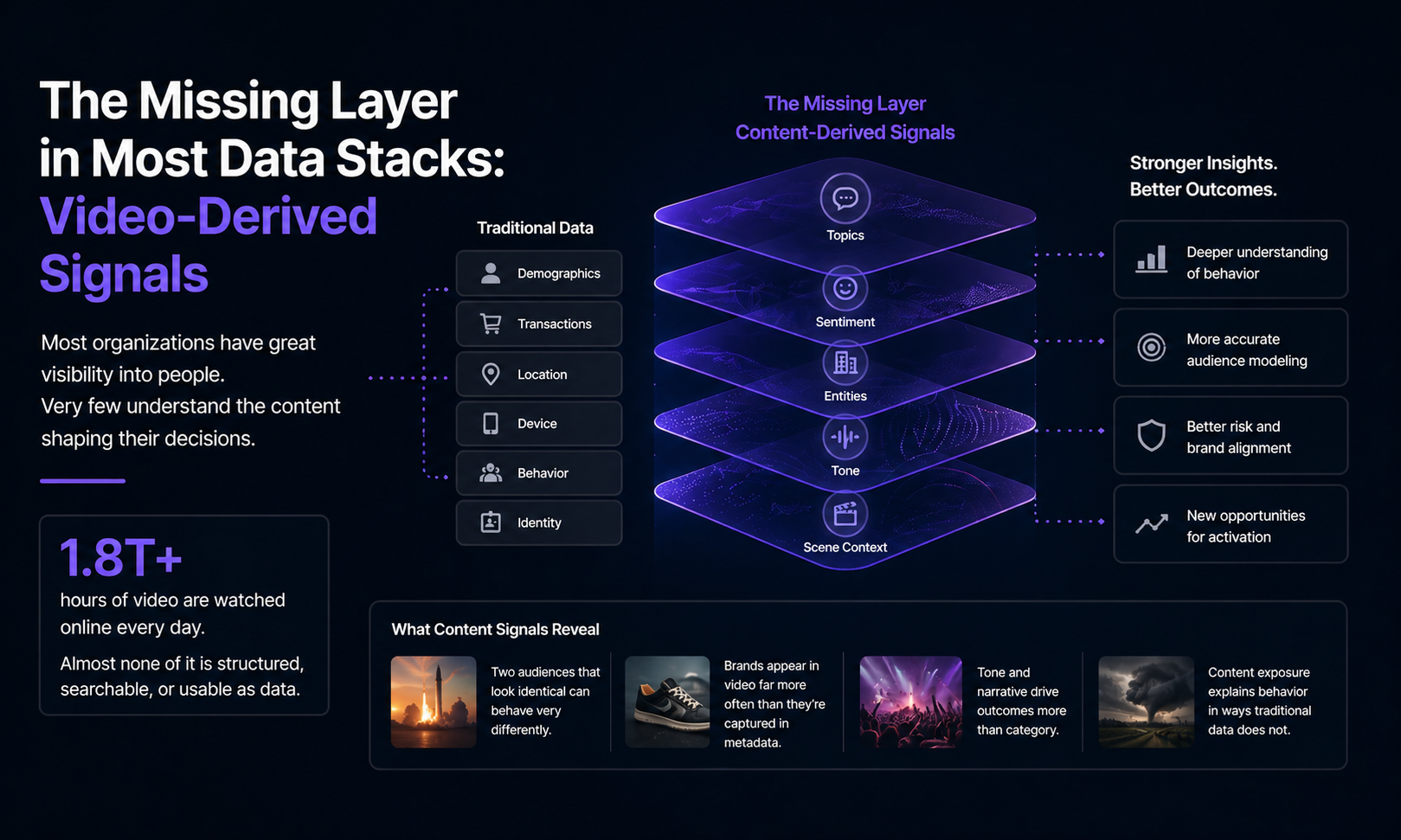
Traditional contextual targeting often relies heavily on a page, title, description, or broad content category. That can be useful, but video contains far more information than its metadata can communicate.
Qortex Advanced Video Intelligence, or AVI, analyzes the video itself. It evaluates signals such as objects, actions, dialogue, on-screen text, scenes, tone, and sentiment to understand what is happening within the content—not merely how the content was labeled.
Those signals can reveal meaningful differences between videos that appear similar on the surface.
Two videos may both be categorized as “home.” One could show an extensive kitchen renovation, while the other demonstrates affordable ways to prepare a home for holiday guests. The audiences, motivations, appropriate advertisers, and useful messages are different.
Likewise, two technology videos may feature the same device. One focuses on professional productivity; the other evaluates whether the product is suitable for a teenager. A category-level label may treat those videos alike. A deeper understanding of the content creates more precise audience opportunities.
AVI turns that understanding into contextual audiences marketers can use in their campaigns.
Better audience discovery starts with better questions
The value of video intelligence is not limited to confirming the audiences a marketer already expects to find. It can also surface relationships that are less obvious.
A cookware brand might assume its strongest audience lives exclusively inside cooking content. AVI could reveal relevant moments within holiday hosting, home organization, family traditions, wellness, or travel content.
A consumer-electronics brand may begin with technology reviewers, then find meaningful alignment with remote work, education, gaming, travel, or content creation.
A beauty advertiser might discover that its audience is not defined by beauty content alone, but by specific moments involving preparation, confidence, celebration, gifting, or self-care.
This changes the planning question from “Which category should we target?” to “Which content signals and audience mindsets align with what we are selling?”
That is a far more useful question during a season when nearly every advertiser is competing for the same broadly defined shoppers.
Context creates relevance without relying on identity
Black Friday advertising has traditionally depended on knowing as much as possible about the individual shopper: what they searched for, which products they viewed, what they placed in a cart, or what they purchased previously.
Contextual audiences provide another way to build relevance. Instead of depending on who a viewer is, marketers can align advertising with what that viewer has actively chosen to watch and the mindset created by that content.
This does not make every adjacent ad automatically relevant. It makes a deeper level of relevance possible—one based on the actual video moment rather than a broad assumption about the person behind the screen.
For Black Friday campaigns, that distinction matters. The strongest message is not simply the one with the largest discount. It is the one that makes sense for the audience’s current interest, need, and frame of mind.
Find your Black Friday audience before the rush
Black Friday is not one audience, and holiday intent does not suddenly appear when the sale begins.
It develops across product research, entertainment, inspiration, planning, and everyday video viewing. Marketers that can understand those signals have an opportunity to discover more relevant audiences, expand beyond predictable categories, and meet consumers earlier in the consideration process.
AVI helps marketers see the audiences hidden inside video and turn that understanding into actionable contextual segments.
Ready to look beyond the generic Black Friday shopper? Explore the AVI platform to discover the contextual audiences aligned with your holiday campaign.